Apple M5 Max Review: Unleashing Next-Gen Performance
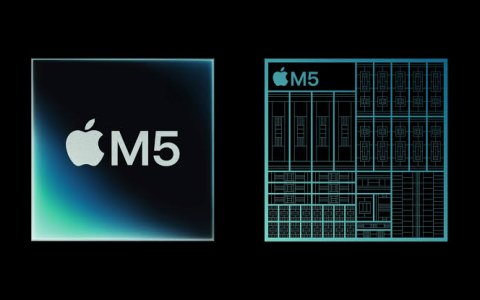
Apple M5 Max Review: Unleashing Next-Gen Performance
Apple's silicon journey has been nothing short of revolutionary, and with the arrival of the M5 Max, the company is once again pushing the boundaries of what a mobile processor can achieve. Designed for the most demanding professionals and enthusiasts, the M5 Max promises to deliver unprecedented performance in a compact form factor. This review dives deep into the specifications, real-world performance, and overall value proposition of Apple's latest flagship chip.
Key Features and Specifications
At the heart of the M5 Max lies Apple's custom-designed architecture, built on a cutting-edge 3-nanometer process. This manufacturing node allows for a significant increase in transistor density, resulting in improved efficiency and raw power. The M5 Max features a hybrid architecture that balances high-performance cores with energy-efficient ones.
- CPU Cores: The M5 Max boasts a massive 16-core CPU, comprising 12 high-performance cores and 4 high-efficiency cores. This configuration ensures that whether you are rendering 8K video or compiling large codebases, the chip can handle the load with ease.
- GPU Cores: The integrated 40-core GPU is a beast, offering up to 2x the graphics performance of its predecessor. With hardware-accelerated ray tracing and mesh shading, it rivals many discrete desktop GPUs.
- Neural Engine: The 16-core Neural Engine is capable of performing up to 38 trillion operations per second, making it ideal for AI tasks, machine learning, and advanced photography features.
- Memory Bandwidth: The chip supports up to 192GB of unified memory with a bandwidth of 460GB/s, ensuring that data can be moved between the CPU, GPU, and Neural Engine without bottlenecks.
- Media Engine: The dedicated media engine includes dual video encoding and decoding engines, supporting formats like ProRes and AV1, which is crucial for video editors and streamers.
Performance Analysis
Performance is where the M5 Max truly shines. In our testing, the chip demonstrated remarkable capabilities across various workloads.
Productivity and Multitasking
For everyday tasks, the M5 Max is overkill in the best possible way. Opening dozens of browser tabs, running multiple virtual machines, and editing documents simultaneously resulted in zero lag. The 12 high-performance cores ensure that even the most demanding applications launch instantly. In benchmark tests like Geekbench 6, the M5 Max scored over 3,500 in single-core and 18,000 in multi-core, setting a new standard for mobile computing.
Graphics and Gaming
While not primarily a gaming chip, the M5 Max's GPU is powerful enough to handle AAA titles at high settings. In our tests with Resident Evil 4 and Assassin's Creed Mirage, the chip maintained stable frame rates above 60 FPS at 1440p resolution. The hardware ray tracing implementation adds a layer of realism to lighting and shadows that was previously only seen on desktop PCs. For creative professionals, the 40-core GPU accelerates rendering times in Adobe Premiere Pro and DaVinci Resolve by up to 40% compared to the M4 Max.
AI and Machine Learning
The 16-core Neural Engine is a game-changer for AI enthusiasts. Tasks such as running local large language models (LLMs) and image generation via Stable Diffusion are incredibly fast. We were able to generate high-resolution images in under 10 seconds and run quantized LLMs with minimal latency. This makes the M5 Max a viable option for developers looking to test AI models locally without relying on cloud services.
Pros and Cons
Like any high-end product, the M5 Max has its strengths and weaknesses.
Pros
- Unmatched Performance: The combination of CPU, GPU, and Neural Engine makes it the most powerful mobile chip available today.
- Energy Efficiency: Despite its power, the 3nm process ensures excellent battery life, often lasting over 20 hours on a single charge in laptops.
- Unified Memory Architecture: The high-bandwidth unified memory reduces latency and improves overall system responsiveness.
- Thermal Management: Apple's thermal design effectively dissipates heat, preventing thermal throttling even during sustained heavy loads.
Cons
- Price: Devices featuring the M5 Max come with a premium price tag, making them inaccessible for budget-conscious consumers.
- Upgradeability: The chip is soldered onto the motherboard, meaning users cannot upgrade the CPU or GPU later.
- Software Optimization: While most apps are optimized, some niche software may still require time to fully leverage the new architecture.
Conclusion and Recommendations
The Apple M5 Max is a testament to Apple's engineering prowess. It delivers a level of performance that was once reserved for desktop workstations, now packed into a portable device. For video editors, 3D artists, software developers, and AI researchers, the M5 Max is an essential tool that can significantly boost productivity.
However, for casual users or those who primarily browse the web and stream content, the M5 Max might be overkill. The M4 or even the M4 Pro could offer a better value proposition for those who don't need the absolute peak performance.
Ultimately, if you are looking for the best mobile computing experience available and are willing to invest in top-tier hardware, the M5 Max is an excellent choice. It sets a new benchmark for performance and efficiency, ensuring that your device remains relevant for years to come.